
I. Introduction
The cone angle of a fermentation tank is one of the most consequential design decisions a brewer makes. It affects yeast settling behavior, tank height, floor space utilization, CIP accessibility, and even the ease of yeast harvesting.
Three cone angles dominate the brewing industry: 90 degrees, 75 degrees, and 60 degrees. Each represents a different compromise between yeast collection efficiency, structural height, and manufacturing cost. Understanding these trade-offs helps brewers select the angle that best suits their yeast management practices, tank layout, and beer styles.
II. The Role of the Cone in Fermentation
The conical bottom of a fermentation tank serves two primary functions. First, it directs settled yeast and trub toward the bottom outlet for removal. Second, it concentrates the yeast into a compact slurry that can be harvested for repitching.
The steepness of the cone determines how effectively yeast slides down the cone walls. Steeper cones allow yeast to flow more freely, while shallower cones may trap yeast on the walls, requiring manual intervention or increased CIP effort.
Cone angle also influences the hydrostatic pressure at the bottom of the tank. Steeper cones produce a taller tank for the same volume, increasing the pressure at the outlet valve. This affects yeast handling and the risk of autolysis in tall tanks.
III. The 90-Degree Cone
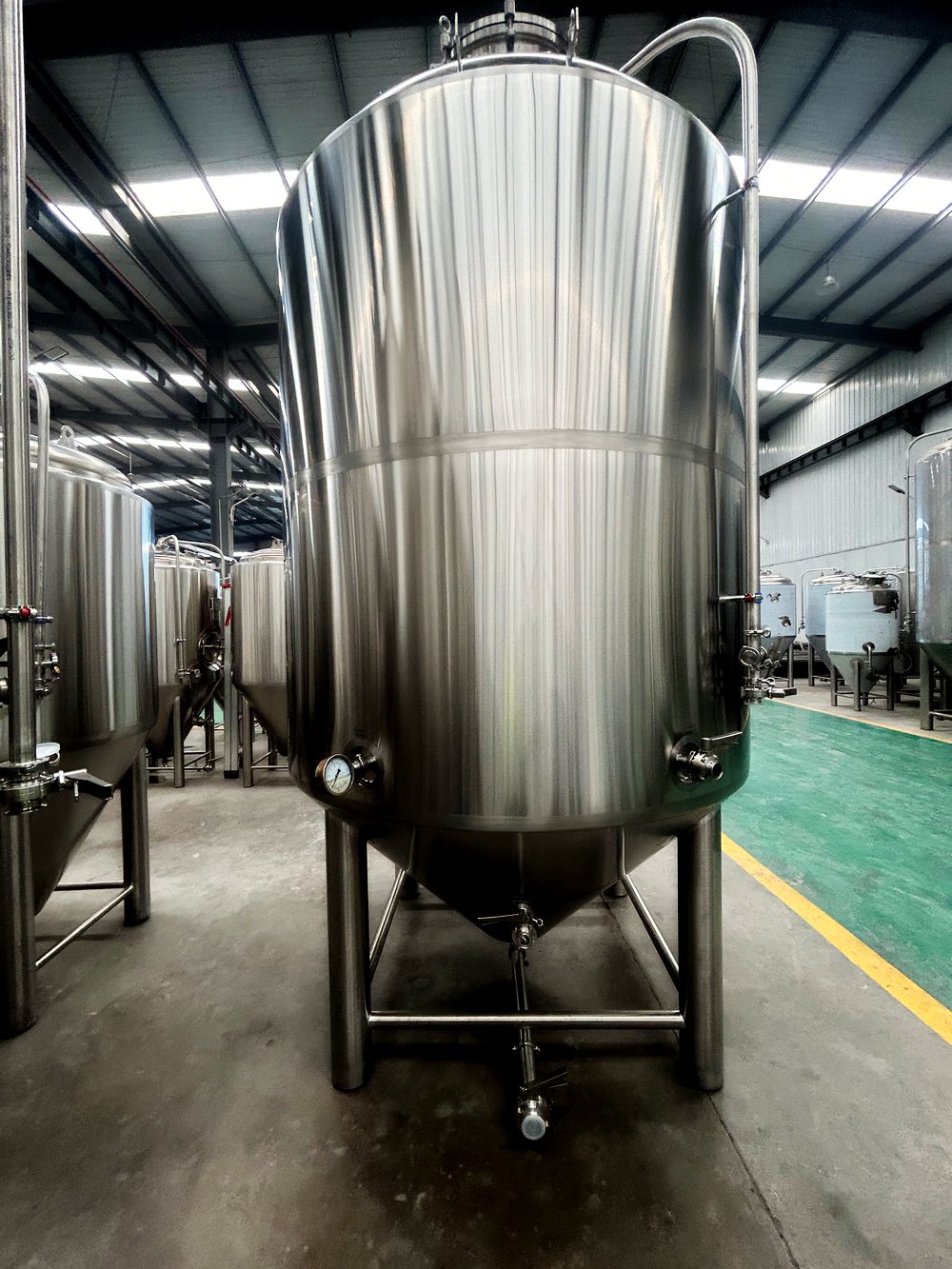
1. Characteristics
A 90-degree cone has a included angle of 90 degrees, meaning each side slopes at 45 degrees from horizontal. This is the steepest commonly used cone angle in brewery fermentation tanks.
The steep slope allows yeast and trub to slide freely down the cone walls with minimal adhesion. Yeast compaction in a 90-degree cone is generally good, producing a dense slurry with low liquid content.
Tanks with 90-degree cones are taller than equivalent-volume tanks with shallower cones. For a given diameter, the cone adds more height than a 75-degree or 60-degree cone. This can be a constraint in buildings with limited ceiling height.
2. Applications
The 90-degree cone is preferred for breweries that harvest yeast regularly for repitching. The steep walls minimize yeast retention on the cone surface, ensuring that most of the crop reaches the bottom outlet.
It is also well suited for ales that produce fluffy, less compact yeast. Top-fermenting ale strains tend to settle slowly and form loose sediment. A steep cone helps concentrate these strains into a manageable slurry.
Breweries producing high-gravity beers benefit from the 90-degree cone as well. The increased hydrostatic pressure at the bottom helps push viscous, yeast-rich slurry through the outlet valve.
3. Limitations
The added height of the 90-degree cone can make tank installation challenging in low-ceiling facilities. Each additional meter of height may require building modifications or specialized lifting equipment.
The steeper cone also increases the distance from the tank wall to the outlet, which can make manual access for cleaning more difficult. Automated CIP spray devices are essential for reaching the full cone surface.
Manufacturing cost is slightly higher for 90-degree cones due to the additional material required and the more complex forming process.
IV. The 75-Degree Cone
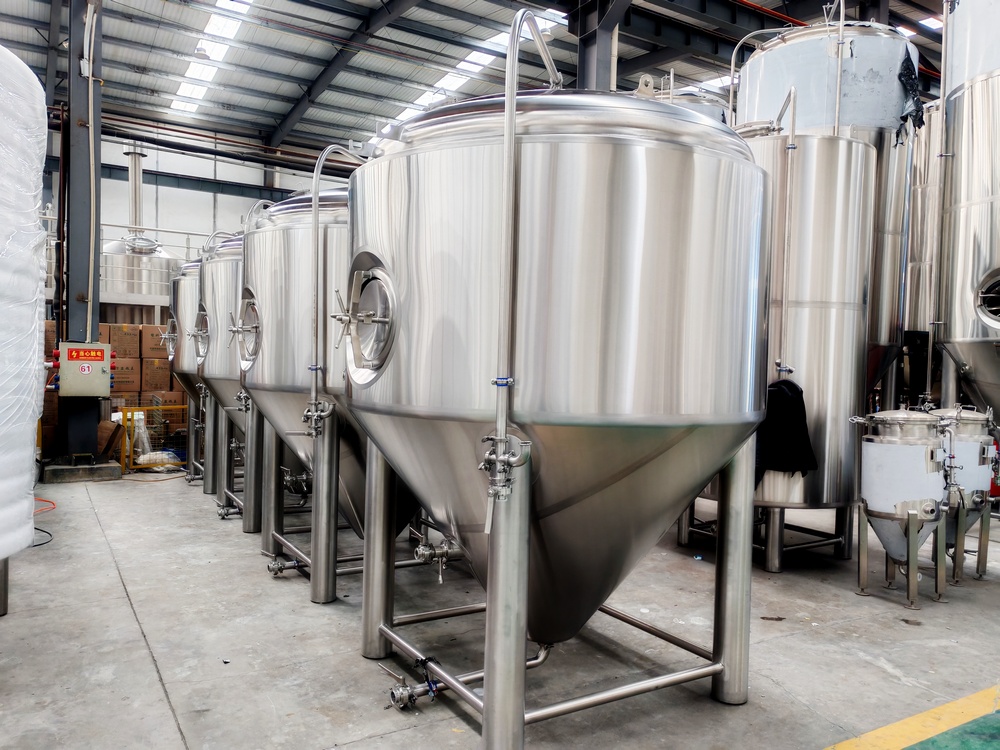
1. Characteristics
The 75-degree cone represents the middle ground. With a slope of approximately 37.5 degrees from horizontal, it provides good yeast flow while keeping tank height moderate.
Yeast settling in a 75-degree cone is still effective for most commercial yeast strains. Some minor yeast adhesion may occur on the cone walls, but regular cropping cycles prevent buildup.
The 75-degree cone is the most common angle found in mid-size breweries. It offers a practical balance between yeast harvesting efficiency and building height constraints.
2. Applications
The 75-degree cone is a versatile choice for breweries producing a mix of ale and lager styles. Lager yeasts, which are typically more flocculent and compact, settle well in a 75-degree cone. Ale yeasts perform adequately as well, though some fluffy strains may require additional attention during cropping.
Tanks installed in buildings with standard ceiling heights — typically 6 to 8 meters — fit comfortably with 75-degree cones. The reduced height compared to 90-degree cones allows more flexibility in tank placement and mezzanine design.
Breweries that crop yeast infrequently — every 5 to 10 batches rather than every batch — find that the 75-degree cone accumulates manageable amounts of yeast without excessive compaction or autolysis risk.
3. Limitations
Very flocculent yeast strains may compact excessively in a 75-degree cone during extended holding periods. The yeast at the bottom of the cone can become so dense that it blocks the outlet valve. Regular cropping intervals mitigate this risk.
Yeast harvested from a 75-degree cone typically has slightly higher liquid content than from a 90-degree cone. This means more beer is removed with the yeast, resulting in marginally higher losses.
V. The 60-Degree Cone
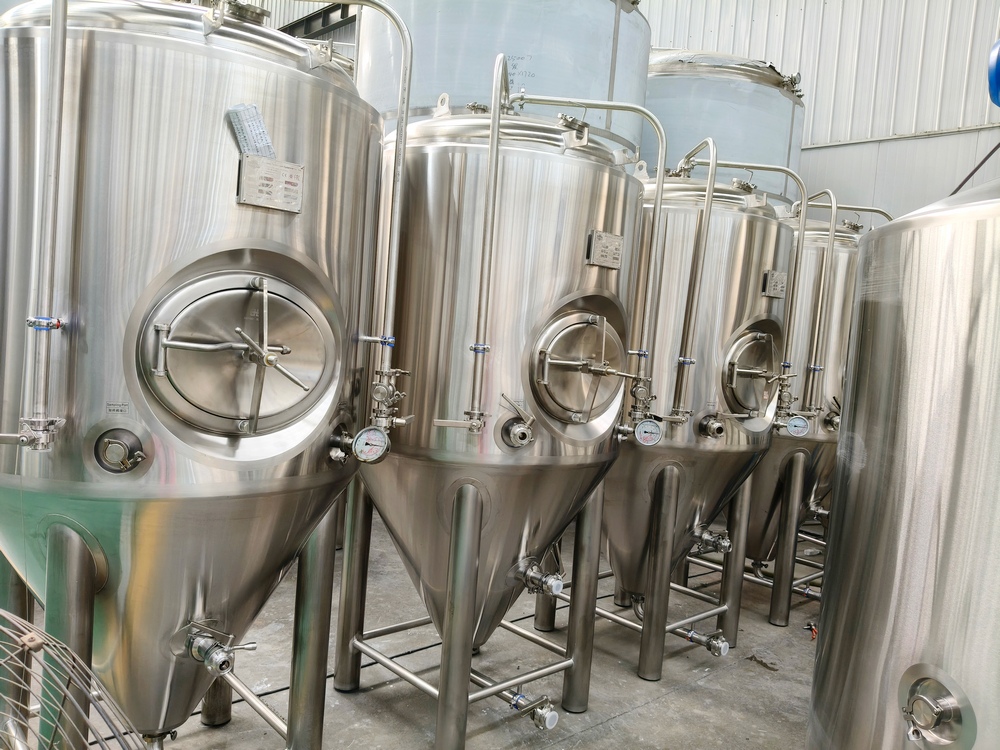
1. Characteristics
The 60-degree cone is the shallowest of the three common angles, sloping at 30 degrees from horizontal. It produces the shortest tank for a given volume, making it attractive for facilities with severe height restrictions.
Yeast flow in a 60-degree cone is noticeably slower than in steeper cones. Yeast tends to adhere to the cone walls and may require mechanical assistance — such as a cone scraper or vibration — to move toward the outlet.
Compaction at the bottom of a 60-degree cone can be excessive, particularly with flocculent lager strains. The yeast at the apex of the cone may become so dense that it forms a plug that resists flow.
2. Applications
The 60-degree cone is primarily used in facilities where ceiling height is the overriding constraint. Buildings with low roofs, basement installations, or shipping-container breweries often require the shortest possible tank profile.
It is also used for tanks that are not intended for yeast harvesting. Some breweries centrifuge or filter the beer after fermentation and have no need to collect yeast from the cone. In these cases, the cone serves mainly as a drain surface for CIP liquids.
Non-flocculent yeast strains that remain in suspension during fermentation may be suitable for 60-degree cones, as little yeast settles to the bottom anyway.
3. Limitations
Yeast harvesting from a 60-degree cone is difficult and inefficient. The yeast that does settle is often too compacted to flow freely, and the walls retain a significant layer of yeast after draining.
CIP cleaning of a 60-degree cone requires more attention. The shallower slope allows solids to cling to the walls, and the spray pattern from a standard CIP ball may not reach all areas effectively. Dedicated cone spray devices or manual cleaning may be necessary.
The risk of yeast autolysis is higher in 60-degree cones because the compacted yeast at the bottom experiences greater hydrostatic pressure and reduced nutrient availability. Autolyzed yeast releases off-flavors that can spoil the beer above.
VI. Comparative Summary
| Factor | 90° Cone | 75° Cone | 60° Cone |
|---|---|---|---|
| Yeast flow | Excellent | Good | Poor |
| Yeast compaction | Moderate | Good | Excessive |
| Harvesting ease | Easy | Moderate | Difficult |
| Tank height | Tallest | Moderate | Shortest |
| CIP difficulty | Low | Moderate | High |
| Building height requirement | High | Medium | Low |
| Best for | Ale yeasts, regular cropping | Mixed styles, standard facilities | Height-limited spaces, non-harvest tanks |
VII. Other Factors Influencing Cone Selection
1. Tank Diameter and Volume Ratio
As tank diameter increases, the cone occupies a larger proportion of total tank volume. A 90-degree cone on a 4-meter diameter tank holds significantly more volume than the same cone on a 2-meter tank. The brewer must account for this when calculating working volume and headspace.
2. Yeast Strain Characteristics
Different yeast strains behave differently in the cone. English ale strains are often powdery and slow to settle. German lager strains are flocculent and compact quickly. Belgian strains vary widely. The brewer’s experience with their specific strains should guide cone angle selection.
3. Cropping Frequency
Breweries that crop yeast after every fermentation can tolerate shallower cones because the yeast does not accumulate long enough to compact or autolyze. Breweries that crop every 5 to 10 batches benefit from steeper cones that minimize retention and compaction.
4. Cooling Jacket Placement
The cooling jacket on a conical fermenter typically covers the cylindrical section and may extend partially onto the cone. On steep cones, the jacket can extend further down without interfering with yeast collection. On shallow cones, the jacket must stop higher to leave room for yeast movement.
VIII. Conclusion
There is no universally correct cone angle. The 90-degree cone offers the best yeast flow and harvesting characteristics but demands more building height. The 75-degree cone provides a practical balance for most breweries. The 60-degree cone solves height constraints but sacrifices yeast handling performance.
The right choice depends on the brewery’s yeast management practices, building dimensions, beer styles, and production volume. A brewer who understands these trade-offs can select a cone angle that supports efficient operation without compromising beer quality.
Looking for fermentation tanks with the right cone angle for your brewery? Contact us to discuss your yeast handling needs and facility constraints.
Ethan
Sales Manager
 English
 French
 Spanish