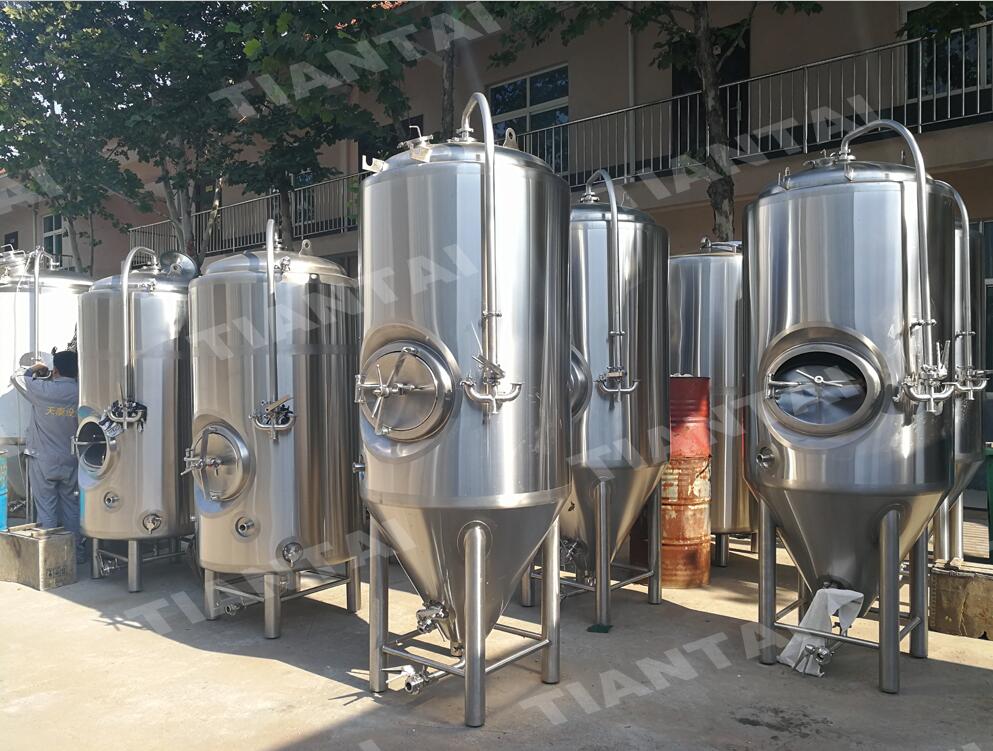
500L Combined 3-Vessel Brewhouse with Fermenters: Compact Design, Full Brewing Capability
- Jul 09, 2026
- 58
- tiantai
I. The Space Challenge Every Small Brewery Faces
Space is the one thing that every small brewery wishes it had more of.You need a mash tun, a lauter tun, and a brew kettle to produce professional-quality beer. You need fermentation tanks to turn that wort into beer. You need cold storage, grain storage, a milling area, and room for your staff to move around. All of this has to fit into a facility that is almost never as large as you would like.
For decades, the solution was simple: buy a bigger space or compromise on your equipment. But a third option has emerged in recent years — the combined 3-vessel brewhouse.
This design packs the functionality of a traditional three-vessel system into a footprint that is closer to a two-vessel system. It does this by combining two functions into a single vessel while keeping the third vessel separate. The result is a brewing system that delivers full three-vessel capability without the space penalty.
In this article, we take a close look at a 500L combined 3-vessel brewhouse paired with matching fermentation tanks, and explain why this configuration is an ideal choice for small craft breweries.
II. What Is a Combined 3-Vessel Brewhouse?
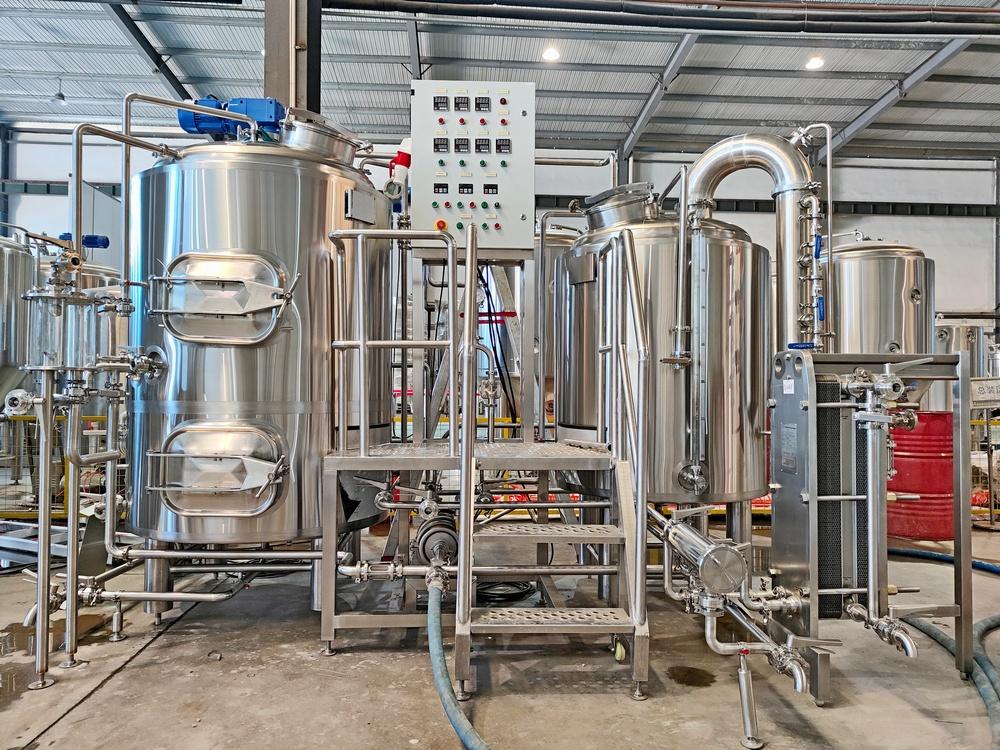
A traditional three-vessel brewhouse uses three separate tanks: a mash tun, a lauter tun, and a brew kettle. Each vessel has a single, dedicated function.
A combined 3-vessel brewhouse achieves the same three functions using only two physical vessels. This is accomplished by combining two compatible functions into one tank.
The Two Vessels, Three Functions Design
In this 500L combined system, the configuration works as follows:*Vessel 1: Combination Mash Tun / Lauter Tun
This single vessel handles both mashing and lautering. During mashing, milled grains are mixed with hot water, and the rake agitator ensures even temperature distribution for efficient starch conversion. When mashing is complete, the same vessel switches to lautering mode. The false bottom supports the grain bed while the wort drains through, and the rake system can be used to cut the grain bed for improved flow.
*Vessel 2: Brew Kettle
This vessel handles boiling, hop additions, and whirlpooling. It is steam-jacketed for even, intense heating. After boiling, the wort is circulated to create a whirlpool effect, separating trub from the clear wort before transfer to the fermenter.
Why This Design Works
The key insight is that mashing and lautering happen sequentially, not simultaneously. You cannot lauter until mashing is complete. So combining these two functions into a single vessel does not create a bottleneck. It simply means you use the same tank for two different jobs at different times.The brew kettle, meanwhile, remains a dedicated vessel because boiling overlaps with lautering. While the first batch is lautering, the kettle is already heating up for the boil. This overlap is what makes three-vessel brewing efficient, and the combined design preserves it.
III. Advantages of the Combined Design
1. Smaller Footprint
A 500L combined 3-vessel brewhouse occupies approximately 20% to 30% less floor space than a traditional three-vessel system of the same capacity. For a small brewery where every square meter counts, this is a significant advantage.2. Lower Cost
Fewer vessels mean lower material and fabrication costs. The combined design typically costs 10% to 15% less than a traditional three-vessel system, freeing up capital for fermentation tanks, cold storage, or taproom improvements.3. Same Brewing Capability
Despite having only two vessels, the combined system delivers the same brewing capability as a three-vessel system. You can perform step mashes, fly sparge, achieve high extraction efficiency, and produce the same quality of beer.4. Easier Cleaning
Fewer vessels mean fewer surfaces to clean, fewer gaskets to replace, and less time spent on sanitation between batches. For a small team, this reduction in cleaning workload is a real benefit.5. Shorter Learning Curve
Operators need to master two vessels instead of three. The simpler layout reduces the cognitive load on brewers, especially those who are new to commercial-scale equipment.IV. The Fermentation Side: Completing the System
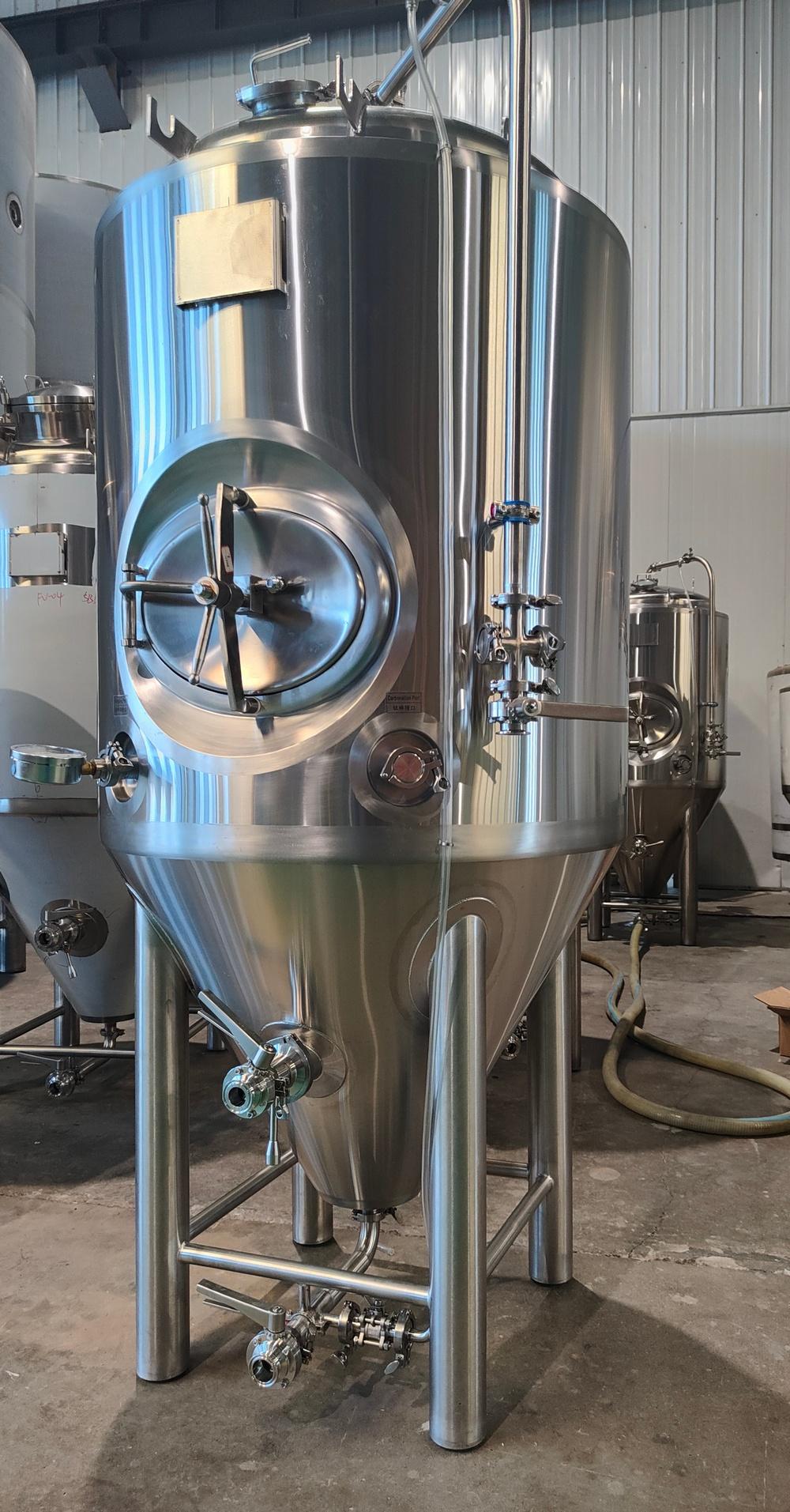
A brewhouse is only half of the equation. The fermentation tanks are where the wort becomes beer, and choosing the right tanks is equally important.
Matching Fermentation Capacity
For a 500L brewhouse, the recommended fermentation capacity is at least 1000L to 1500L. This allows you to brew two to three batches before needing to empty a fermenter.Common configurations include:
- Two 500L fermenters: Simple and cost-effective. Brew one batch, transfer to a fermenter, brew another batch the next day.
- Three 500L fermenters: More flexibility. Allows for different beer styles to be fermented simultaneously.
- One 1000L fermenter: Useful for double-batching into a single tank.
Fermenter Features
The fermentation tanks paired with this system include:- Conical bottom with 60° cone angle: Efficient yeast harvesting and sediment removal.
- Cooling jacket: Dimple plate design for precise temperature control.
- Sanitary sampling valve: Aseptic sampling without opening the tank.
- Pressure rating: Up to 2 bar for natural carbonation and closed transfers.
- CIP spray ball: Automated cleaning between batches.
Glycol Chiller
A glycol chiller circulates chilled coolant through the fermenter jackets, maintaining precise fermentation temperatures regardless of ambient conditions.V. Who Is a 500L Combined System For?
Brewpubs with Limited Space
Urban brewpubs often operate in tight spaces where every square meter is expensive. The combined design allows them to have full three-vessel capability in a footprint that fits their facility.Nano Breweries Transitioning to Commercial Production
For brewers moving from homebrew-scale to commercial production, the combined system offers a familiar learning curve with professional-grade results.Pilot Plants in Established Breweries
Breweries testing new recipes benefit from the combined system's flexibility and smaller batch size, without sacrificing the three-vessel process they use in production.Teaching Facilities
Brewing schools appreciate the combined design because it teaches students the full three-vessel process while occupying less lab space.VI. Key Considerations
Process Sequencing
Because mashing and lautering share a single vessel, you cannot mash the next batch while the current batch is lautering. This means the combined system is best suited for breweries brewing one to two batches per day. For three or more batches per day, a traditional three-vessel system with overlapping processes may be more efficient.Heating Method
The 500L combined system is available with either electric or steam heating. The choice depends on your utility costs, facility constraints, and growth plans.Future Expansion
If you plan to grow beyond 1000L batches in the future, the combined system can serve as a pilot plant while you invest in a larger production system.VII. Conclusion
The 500L combined 3-vessel brewhouse is a clever solution to a common problem: how to get full three-vessel brewing capability in a compact footprint.By combining the mash tun and lauter tun into a single vessel, this design reduces space requirements, lowers costs, and simplifies operation — all without sacrificing beer quality or brewing flexibility.
Paired with the right fermentation tanks and glycol cooling, it forms a complete brewing system that can support a small craft brewery through its critical early years.
Interested in learning more about our 500L combined 3-vessel brewhouse packages? Contact us for a detailed quote and configuration recommendations.
Ethan
Sales Manager
[email protected]

.jpg)