
Carbonation is one of the most defining characteristics of beer and many other beverages. The dissolved CO₂ contributes to mouthfeel, aroma release, foam formation, and perceived freshness. While bottle conditioning and keg carbonation have their place, most commercial breweries carbonate in bright beer tanks before packaging.
The bright beer tank — originally designed for clarifying and holding finished beer — serves as an ideal vessel for carbonation when properly equipped. Understanding the physics of CO₂ dissolution and the available carbonation methods allows brewers to achieve consistent carbonation levels across batches while minimizing oxygen pickup and gas waste.
I. The Science of CO₂ Dissolution
Before discussing methods, it is worth understanding how CO₂ dissolves in liquid. The solubility of carbon dioxide in water or beer follows Henry’s Law: at a given temperature, the amount of dissolved gas is proportional to the partial pressure of that gas above the liquid.
In practical terms, this means two things. First, higher pressure forces more CO₂ into solution. Second, lower temperature increases solubility — cold liquid holds more gas than warm liquid at the same pressure.
The relationship is expressed in volumes of CO₂. One volume means one liter of beer contains one liter of CO₂ gas at standard temperature and pressure. Typical carbonation levels range from 2.2 volumes for mild ales to 2.8 volumes for lagers, with wheat beers and certain specialty styles reaching 3.0 to 3.5 volumes.
To achieve 2.5 volumes at 2°C, the headspace pressure must be maintained at approximately 1.2 bar. At 10°C, the same carbonation level requires approximately 1.8 bar. Temperature control is therefore critical for consistent carbonation.
II. Carbonation Methods
Three primary methods are used for carbonating beer in bright beer tanks.
1. Static Carbonation Through a Carbonation Stone
This is the most common method in craft breweries. A porous carbonation stone — typically made of sintered stainless steel or ceramic — is installed in the tank, either through a port in the sidewall or suspended from the top. CO₂ gas is forced through the stone, emerging as fine bubbles that dissolve into the beer as they rise.
The key to effective stone carbonation is bubble size. Smaller bubbles have a higher surface-area-to-volume ratio and dissolve more quickly. A stone with a pore size of 0.5 to 2 microns produces bubbles small enough to dissolve fully before reaching the surface. Stones with larger pores produce coarse bubbles that escape into the headspace without dissolving, wasting gas.
Pressure differential matters. The CO₂ supply pressure must be 0.3 to 0.5 bar higher than the tank headspace pressure to force gas through the stone. If the differential is too low, flow stops. If too high, the stone may produce excessively large bubbles or cause localized freezing at the stone surface due to the Joule-Thomson effect.
Static carbonation is simple and effective but relatively slow. A 20-hectoliter tank may require 4 to 8 hours to reach target carbonation, depending on stone size, gas flow rate, and beer temperature. The brewer must monitor carbonation level periodically and adjust pressure accordingly.
2. Inline Carbonation
Inline carbonation uses a static mixer or venturi injector installed in the transfer line between the fermentation tank and the bright beer tank. CO₂ is injected into the beer stream as it flows through the line, and the turbulent flow in the mixer disperses the gas into fine bubbles.
The advantage of inline carbonation is speed. Carbonation occurs during the transfer, so the beer arrives at the bright beer tank already at the target carbonation level. No additional holding time is needed.
Inline systems require precise control of beer flow rate and CO₂ injection pressure. If the beer flow slows, too much CO₂ is injected relative to the volume, causing over-carbonation. If the beer flow surges, under-carbonation results. A flow meter and automatic control valve are essential for consistent results.
Inline carbonation also introduces CO₂ at a point where dissolved oxygen can be stripped from the beer stream. This is a secondary benefit — the CO₂ displaces any residual oxygen picked up during transfer.
The main limitation is that inline systems require calibration for each beer style and temperature. Changing the beer temperature or carbonation target requires recalibration of the injection parameters.
3. Headspace Carbonation
Headspace carbonation relies on the natural equilibrium between gas in the headspace and liquid in the tank. CO₂ is introduced into the headspace through a sparge tube or simply by pressurizing the tank. Over time, CO₂ dissolves into the beer until equilibrium is reached.
This method is the simplest and requires no special equipment beyond a pressure regulator and gas supply. However, it is also the slowest. A full tank may require 24 to 48 hours to reach equilibrium, depending on the surface area of the liquid-gas interface and the degree of agitation.
Stirring or recirculating the beer accelerates headspace carbonation. Some brewers use a pump to draw beer from the bottom of the tank and spray it back into the headspace, increasing the contact area between liquid and gas. This technique can reduce equilibrium time to 4 to 8 hours.
Headspace carbonation is gentle on the beer — there is no risk of foaming or localized overcarbonation. It is well suited for delicate styles where preserving volatile aromatics is a priority.
III. Equipment Configuration
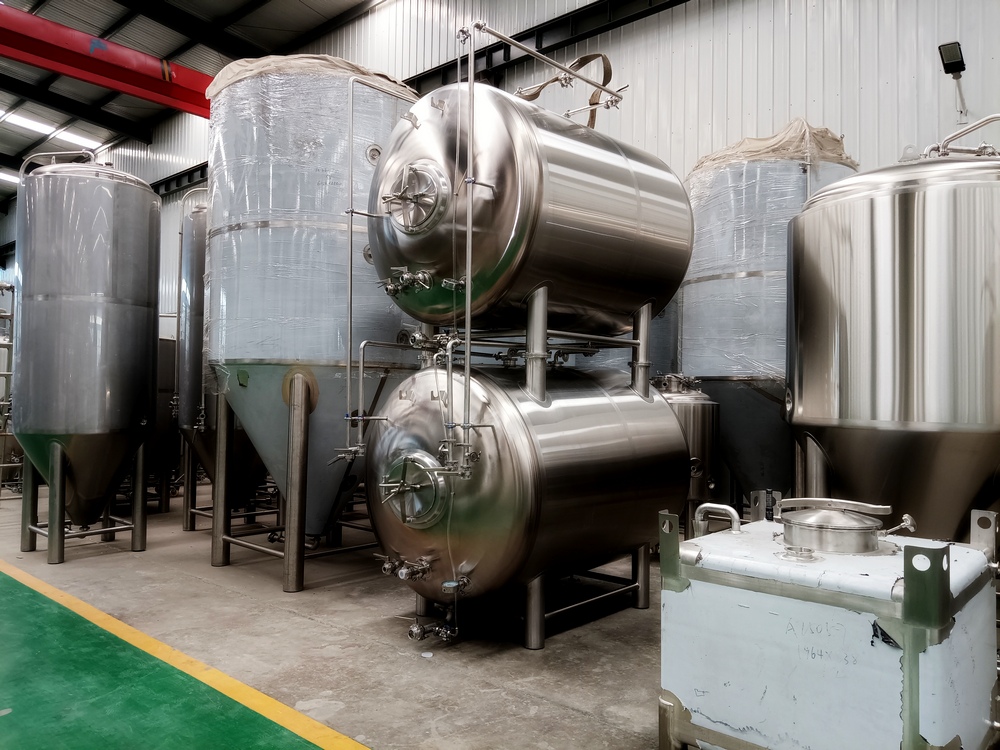
Regardless of the method chosen, several equipment considerations apply.
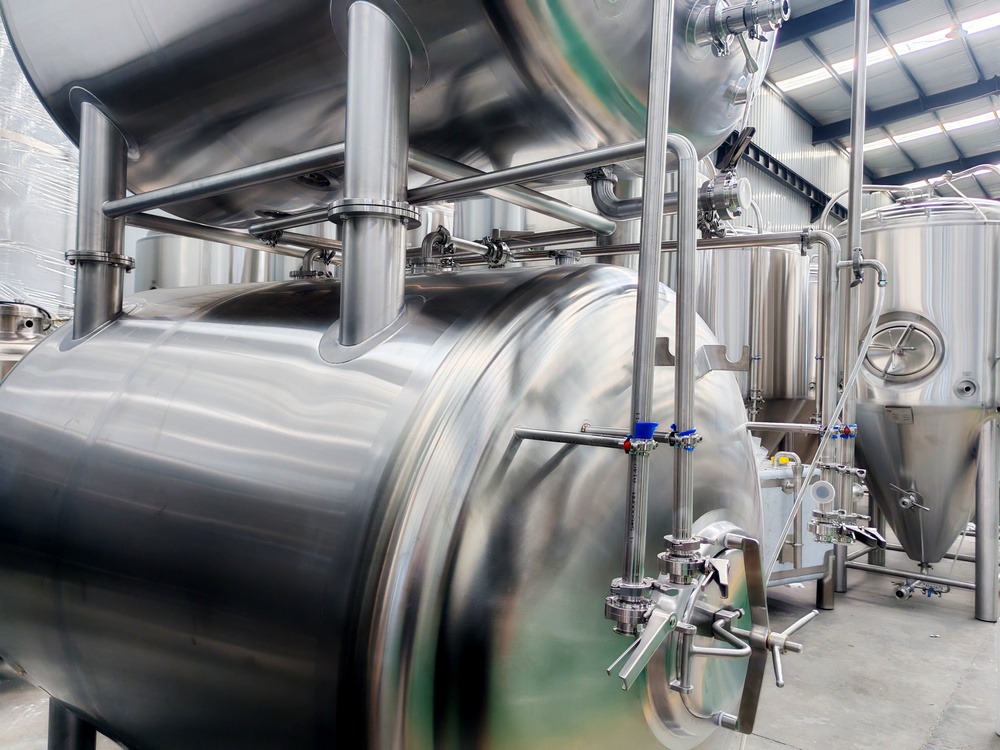
The carbonation stone should be positioned low in the tank, ideally in the bottom third, to maximize bubble residence time in the liquid column. A stone placed too high allows bubbles to escape before dissolving.
A pressure relief valve set slightly above the target carbonation pressure protects the tank from over-pressurization. The valve should be sized to handle the maximum gas flow rate the system can deliver.
A sampling valve at mid-height allows the brewer to draw samples for carbonation measurement without disturbing the tank pressure. Carbonation can be measured using a Zahm & Nagel device or a digital carbonation meter.
Temperature control is essential. The tank jacket must maintain a stable temperature throughout the carbonation process. Temperature fluctuations cause pressure changes that shift the carbonation equilibrium, leading to inconsistent results.
IV. Counterpressure Filling Considerations
Carbonated beer in a bright beer tank is under pressure. Packaging must be done under counterpressure to prevent CO₂ breakout and foaming.
For keg filling, a counterpressure filler purges the keg with CO₂, pressurizes it to match the tank pressure, then fills from the bottom while venting headspace gas. The fill rate must be controlled to avoid turbulence that strips carbonation.
For bottle or can filling, a counterpressure filler operates on the same principle. The container is purged, pressurized, filled, and sealed without releasing the dissolved CO₂.
If the bright beer tank pressure drops during filling, carbonation levels in the remaining beer will decrease as CO₂ comes out of solution to restore equilibrium. Maintaining consistent headspace pressure throughout the filling run is critical.
VI. Troubleshooting Common Issues
Under-carbonation is usually caused by insufficient pressure, excessive temperature, or inadequate contact time. Check the tank pressure gauge against the carbonation chart for the measured beer temperature. Verify that the carbonation stone is not clogged.
Over-carbonation results from excessive pressure or prolonged contact time. Bleed headspace pressure gradually and allow the beer to equilibrate before measuring again.
Foaming during transfer or packaging indicates that the beer is over-carbonated for its temperature, or that the transfer pressure is too low. Reduce carbonation level or increase backpressure in the receiving vessel.
Uneven carbonation across tanks suggests differences in temperature, pressure, or stone performance between tanks. Calibrate instruments and verify that all tanks are at the same temperature before comparing readings.
VII. Conclusion
Carbonation in bright beer tanks is a straightforward process when the underlying principles are understood. Static carbonation through a stone offers simplicity and control. Inline carbonation provides speed and oxygen stripping. Headspace carbonation delivers gentleness for sensitive beers.
The right method depends on production volume, beer styles, and packaging format. Regardless of the approach, consistent temperature, accurate pressure control, and regular verification are the keys to reliable carbonation.
Looking for bright beer tanks equipped for carbonation? Contact us to discuss your tank configuration and carbonation requirements.
Ethan
Sales Manager
 English
 French
 Spanish