How the Sparge Ring Design Affects Extract Yield and Water Usage
- Aug 10, 2026
- 58
- tiantai
I. The Final Rinse That Makes a Difference
After the mash has been drained, the grain bed still holds a significant amount of sugary liquid. This liquid is valuable — it contains fermentable sugars that were not fully extracted during the initial runoff.The sparge ring is the device that delivers hot water evenly across the surface of the grain bed during this final rinse. Its design determines how effectively the remaining sugars are washed from the grain, and how much water is required to do so.
A well-designed sparge ring maximizes extract yield while minimizing water consumption. A poorly designed one leaves sugar behind or uses excessive water that must be boiled off later.
II. What a Sparge Ring Does
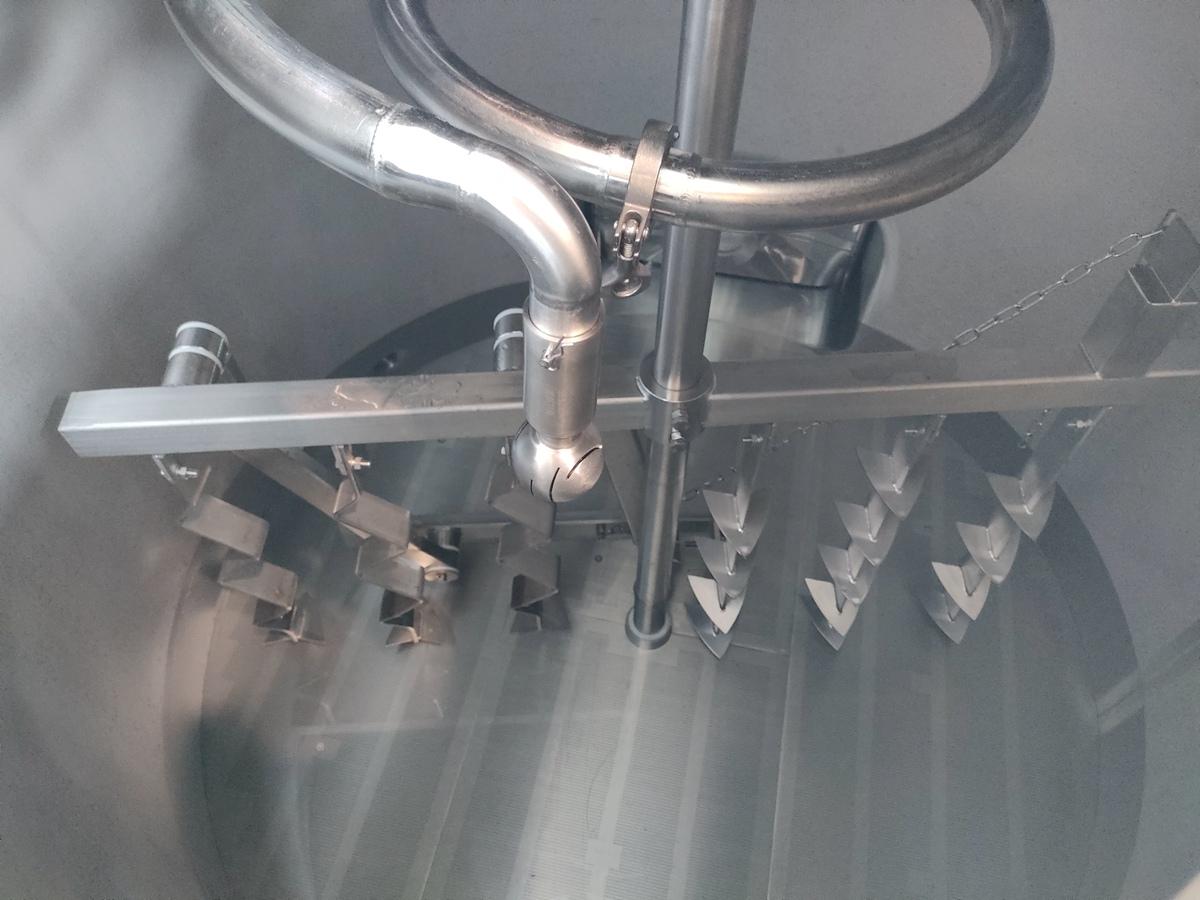
The sparge ring is mounted inside the lauter tun, typically near the top of the vessel. It is a circular pipe or manifold with multiple holes or nozzles directed downward toward the grain bed.
Hot water at 75°C to 78°C flows through the ring and sprays evenly across the entire surface of the grain bed. The water percolates through the grain, dissolving and carrying residual sugars down to the false bottom, where it is collected as wort.
The goal is to maintain a thin layer of water above the grain bed at all times during sparging. If the water level drops too low, air enters the grain bed and disrupts flow. If the water level rises too high, it dilutes the wort and reduces concentration.
III. Key Design Parameters
Hole Size and Spacing
The holes in the sparge ring must be large enough to avoid clogging but small enough to create a fine, uniform spray. Typical hole diameters range from 2mm to 4mm.The spacing between holes determines the uniformity of coverage. Holes that are too far apart leave dry patches on the grain bed, reducing extraction efficiency. Holes that are too close together create overlapping spray patterns that waste water.
A good rule is to space holes so that the spray cones overlap slightly at the grain bed surface, ensuring complete coverage.
Number of Rings
Small lauter tuns may use a single sparge ring. Larger vessels often use two concentric rings — an inner ring and an outer ring — to ensure even coverage across the full diameter of the grain bed.Each ring should have its own flow control valve, allowing the operator to balance the flow between the inner and outer zones.
Spray Angle
The nozzles should be angled to spray downward at approximately 30 to 45 degrees from vertical. This angle provides good coverage without disturbing the grain bed surface.Nozzles that spray too vertically can create channels in the grain bed. Nozzles that spray too horizontally waste water against the tank wall.
IV. How Design Affects Extract Yield
The sparge ring's ability to deliver uniform water distribution directly impacts how much sugar is recovered from the grain.When water is applied unevenly, some areas of the grain bed are over-sparged while others are under-sparged. Over-sparged areas become depleted of sugar early, and the water that follows simply dilutes the wort. Under-sparged areas retain sugar that is never recovered.
A well-designed sparge ring with even distribution ensures that the entire grain bed is rinsed uniformly. This maximizes the sugar recovery from each batch and improves overall brewhouse efficiency.
Studies and practical experience show that improving sparge water distribution can increase extract yield by 1% to 3%, which translates directly to lower grain costs per batch.
V. How Design Affects Water Usage
Water is a significant cost in brewing, both for purchasing and for wastewater treatment. The sparge ring design influences how much water is needed to achieve the target pre-boil volume.A poorly designed sparge ring requires more water to achieve the same sugar recovery because some of the water bypasses the grain or flows through channels without contacting the grain evenly.
A well-designed sparge ring with proper hole sizing, spacing, and spray angle achieves the target extract with less water. This reduces the boiling time required to evaporate excess water and lowers energy consumption.
The savings can be substantial. Reducing sparge water volume by 10% to 15% through improved sparge ring design reduces both water costs and energy costs over the course of a brewing year.
VI. Common Problems and Solutions
Channeling
Water flows through preferential paths in the grain bed, leaving large areas untouched. Solution: Ensure the sparge ring provides even coverage and maintain a consistent water layer above the grain bed.Clogging
Mineral scale or debris blocks some holes, creating dry spots. Solution: Use a water filter before the sparge ring and clean the ring periodically with descaling solution.Uneven Flow
One side of the ring delivers more water than the other. Solution: Install a flow meter and balancing valve to adjust the distribution.Oversparging
Too much water is applied, diluting the wort and wasting energy. Solution: Monitor the wort gravity during sparging and stop when the gravity drops below the cutoff point.VII. Conclusion
The sparge ring is a small component with a large impact on brewhouse performance. Its design affects how much sugar you extract from your grain and how much water you use to do it.Investing in a well-designed sparge ring — with proper hole sizing, spacing, and spray angle — pays for itself through higher yields and lower utility costs. It is one of the most cost-effective improvements you can make to your lauter tun.
Looking for a sparge ring upgrade for your lauter tun? Contact us for expert advice on beer equipment and brewhouse optimization.
Ethan
Sales Manager
[email protected]