Does a Mirror-Polished Fermentation Tank Improve Yeast and Hop Sedimentation?
- Mar 16, 2026
- 89
- tiantai
In brewery equipment discussions, one question appears quite often:
Should the inside of a fermentation tank be mirror-polished to help yeast and hops settle better?
Some brewers believe that a mirror-polished inner surface can prevent yeast and hop particles from sticking to the cone wall. Others argue that standard 2B stainless steel is already sufficient.
So what actually matters? In reality, surface finish plays a role, but it is not the key factor affecting sedimentation. Tank geometry and brewing operations usually have a much greater impact.
1. Mirror Polish vs 2B Finish in Fermentation Tanks
Stainless steel tanks used in breweries normally have two types of interior finishes:
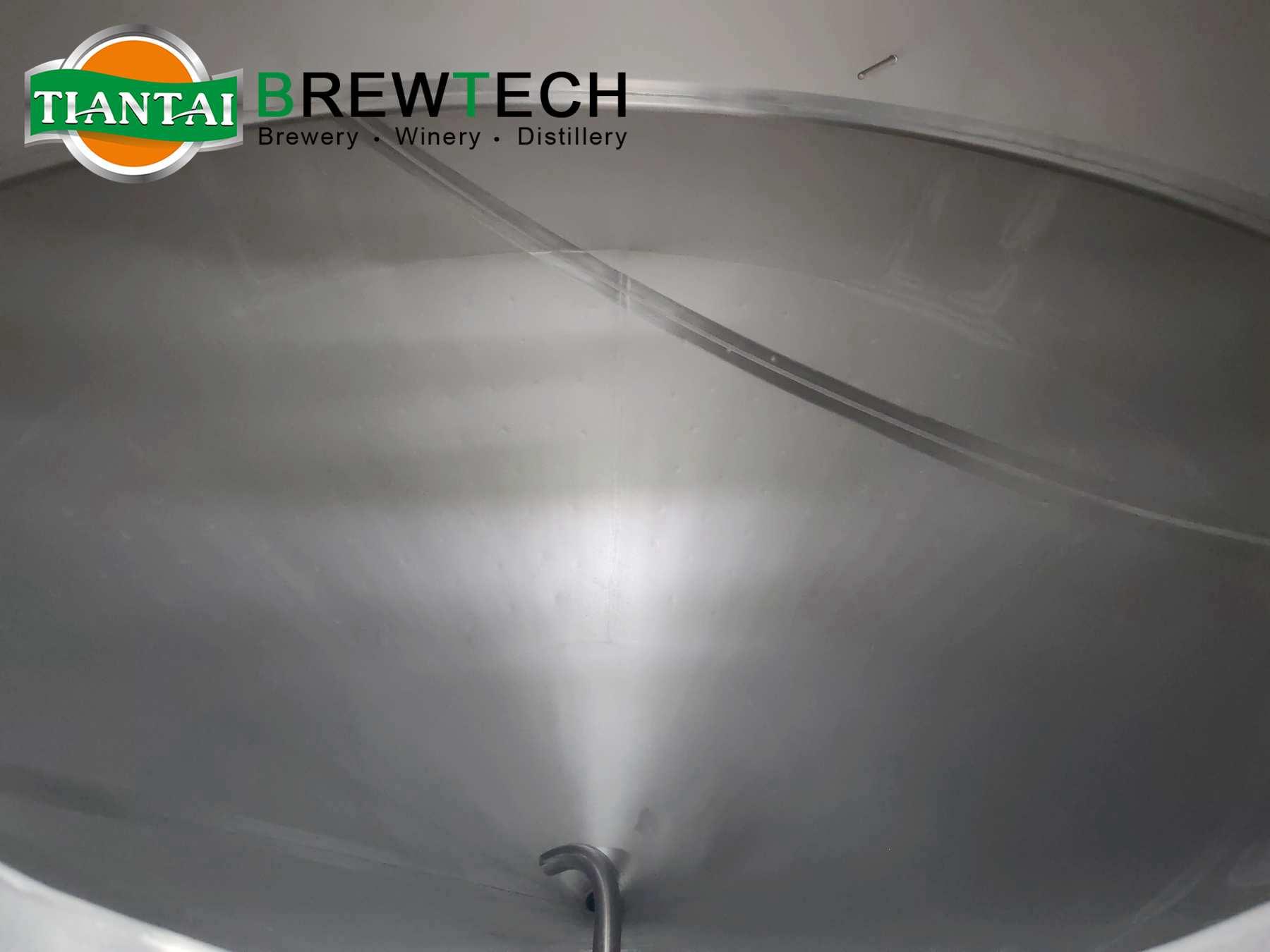
2B Finish
Surface roughness: Ra ≈ 0.4–0.6 μm
Standard finish for most brewing tanks
Cost-effective and widely used
Mirror Polish Finish
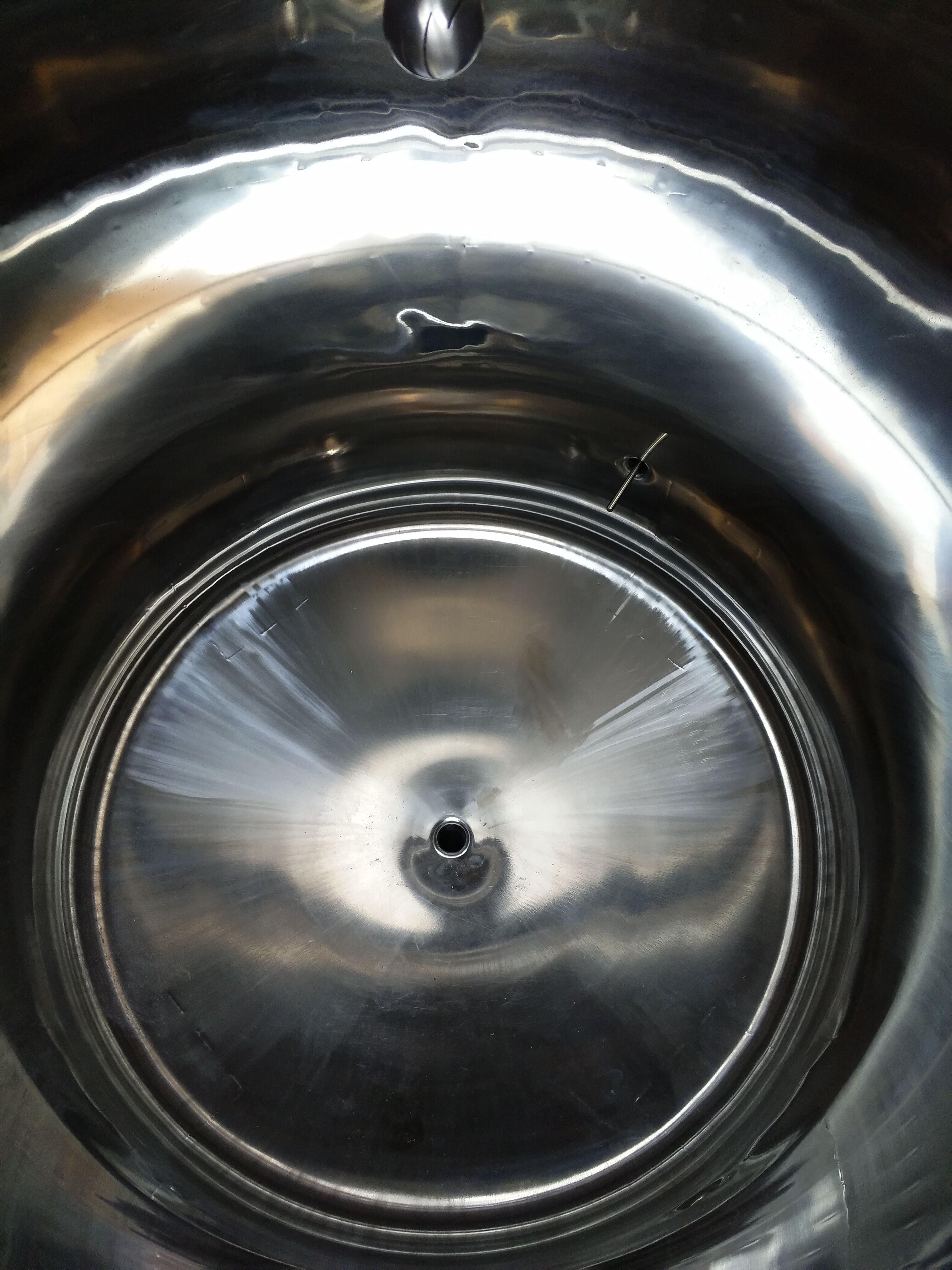
Surface roughness: Ra ≤ 0.2–0.4 μm
Very smooth surface
Often used in pharmaceutical or hygienic industries
A smoother surface reduces friction and adhesion, meaning yeast and hop particles may slide down the cone wall slightly more easily.
However, in practical brewing operations:
The majority of fermentation tanks worldwide use 2B stainless steel, and yeast sedimentation usually works perfectly well.
Therefore, mirror polishing can slightly reduce sticking, but it rarely solves sedimentation problems by itself.
2. Tank Geometry: The Most Important Factor
The design of the fermentation tank has a much stronger influence on sedimentation than surface finish.
Cone Angle
The cone angle determines whether yeast and trub can naturally slide to the bottom outlet.
Typical industry designs:
60° cone – optimal for yeast sedimentation
55° cone – commonly used and acceptable
≤50° cone – higher risk of yeast sticking to the wall
A 60° cone angle allows gravity to move yeast, trub, and hop particles efficiently toward the discharge port.
Height-to-Diameter Ratio (H/D)
Another key parameter is the height-to-diameter ratio of the fermenter.
Industry experience suggests:
H/D 1.8–2.2 – standard
H/D 2.2–2.6 – excellent for sedimentation
H/D above 2.8 – tall tanks may require additional process control
A balanced tank geometry improves natural particle settling.
Cone Volume and Design
The cone section should also provide sufficient volume to collect yeast and hop residues.
If the cone is too shallow or too small:
Yeast may accumulate along the cone wall
Sediment may not concentrate at the bottom outlet
A well-designed cone ensures efficient yeast collection and easier discharge.
3. Brewing Operations Often Matter Even More
Even with a well-designed fermentation tank, brewing practices strongly influence sedimentation.
Cold Crashing Temperature
Cold crashing helps yeast flocculate and settle.
Typical practice:
0–2°C cold crash – significantly improves yeast and hop settling
4–6°C cooling – may lead to incomplete sedimentation
Lower temperatures increase particle density and help them slide down the cone.
Timely Yeast Removal
Yeast should usually be discharged soon after fermentation finishes.
If yeast remains in the cone for too long:
It can compact tightly
It may adhere more strongly to the cone wall
Yeast removal becomes more difficult
Regular yeast dumping helps maintain good sedimentation conditions.
Dry Hopping Load
Modern craft beers often use large dry-hop additions.
Pellet hops can break into fine particles and sometimes form temporary layers on the cone surface. In such situations, some breweries use gentle CO₂ rousing from the bottom of the cone to re-suspend the material before cold crashing again.
4. Practical Recommendations for Fermentation Tank Design
When designing brewery fermentation tanks, the following principles are generally recommended:
Use a 60° cone angle
Maintain a balanced height-to-diameter ratio (around 2.2–2.6)
Provide adequate cone volume for yeast collection
Ensure proper yeast discharge piping
Use high-quality stainless steel with a smooth 2B finish
Mirror polishing can be considered as an optional upgrade, but it should not be viewed as the primary solution for sedimentation issues.
Conclusion
While mirror-polished fermentation tanks can slightly reduce yeast and hop adhesion, the overall tank design and brewing practices play a far more important role in achieving good sedimentation.
A well-designed fermenter with the correct cone angle, proper proportions, and appropriate brewing operations—such as cold crashing and timely yeast removal—will usually ensure excellent yeast and hop settling even with a standard 2B stainless steel finish.
For most breweries, smart design and good process control are more valuable than mirror polishing alone.
Are you planning to set up a brewery now? Contact Nicole now to get a complete solution and updated price. Cheers!
Contact Nicole now!
Email: [email protected]
Sales manager of Tiantai beer equipment co
Should the inside of a fermentation tank be mirror-polished to help yeast and hops settle better?
Some brewers believe that a mirror-polished inner surface can prevent yeast and hop particles from sticking to the cone wall. Others argue that standard 2B stainless steel is already sufficient.
So what actually matters? In reality, surface finish plays a role, but it is not the key factor affecting sedimentation. Tank geometry and brewing operations usually have a much greater impact.
1. Mirror Polish vs 2B Finish in Fermentation Tanks
Stainless steel tanks used in breweries normally have two types of interior finishes:
2B Finish
Surface roughness: Ra ≈ 0.4–0.6 μm
Standard finish for most brewing tanks
Cost-effective and widely used
Mirror Polish Finish
Surface roughness: Ra ≤ 0.2–0.4 μm
Very smooth surface
Often used in pharmaceutical or hygienic industries
A smoother surface reduces friction and adhesion, meaning yeast and hop particles may slide down the cone wall slightly more easily.
However, in practical brewing operations:
The majority of fermentation tanks worldwide use 2B stainless steel, and yeast sedimentation usually works perfectly well.
Therefore, mirror polishing can slightly reduce sticking, but it rarely solves sedimentation problems by itself.
2. Tank Geometry: The Most Important Factor
The design of the fermentation tank has a much stronger influence on sedimentation than surface finish.
Cone Angle
The cone angle determines whether yeast and trub can naturally slide to the bottom outlet.
Typical industry designs:
60° cone – optimal for yeast sedimentation
55° cone – commonly used and acceptable
≤50° cone – higher risk of yeast sticking to the wall
A 60° cone angle allows gravity to move yeast, trub, and hop particles efficiently toward the discharge port.
Height-to-Diameter Ratio (H/D)
Another key parameter is the height-to-diameter ratio of the fermenter.
Industry experience suggests:
H/D 1.8–2.2 – standard
H/D 2.2–2.6 – excellent for sedimentation
H/D above 2.8 – tall tanks may require additional process control
A balanced tank geometry improves natural particle settling.
Cone Volume and Design
The cone section should also provide sufficient volume to collect yeast and hop residues.
If the cone is too shallow or too small:
Yeast may accumulate along the cone wall
Sediment may not concentrate at the bottom outlet
A well-designed cone ensures efficient yeast collection and easier discharge.
3. Brewing Operations Often Matter Even More
Even with a well-designed fermentation tank, brewing practices strongly influence sedimentation.
Cold Crashing Temperature
Cold crashing helps yeast flocculate and settle.
Typical practice:
0–2°C cold crash – significantly improves yeast and hop settling
4–6°C cooling – may lead to incomplete sedimentation
Lower temperatures increase particle density and help them slide down the cone.
Timely Yeast Removal
Yeast should usually be discharged soon after fermentation finishes.
If yeast remains in the cone for too long:
It can compact tightly
It may adhere more strongly to the cone wall
Yeast removal becomes more difficult
Regular yeast dumping helps maintain good sedimentation conditions.
Dry Hopping Load
Modern craft beers often use large dry-hop additions.
Pellet hops can break into fine particles and sometimes form temporary layers on the cone surface. In such situations, some breweries use gentle CO₂ rousing from the bottom of the cone to re-suspend the material before cold crashing again.
4. Practical Recommendations for Fermentation Tank Design
When designing brewery fermentation tanks, the following principles are generally recommended:
Use a 60° cone angle
Maintain a balanced height-to-diameter ratio (around 2.2–2.6)
Provide adequate cone volume for yeast collection
Ensure proper yeast discharge piping
Use high-quality stainless steel with a smooth 2B finish
Mirror polishing can be considered as an optional upgrade, but it should not be viewed as the primary solution for sedimentation issues.
Conclusion
While mirror-polished fermentation tanks can slightly reduce yeast and hop adhesion, the overall tank design and brewing practices play a far more important role in achieving good sedimentation.
A well-designed fermenter with the correct cone angle, proper proportions, and appropriate brewing operations—such as cold crashing and timely yeast removal—will usually ensure excellent yeast and hop settling even with a standard 2B stainless steel finish.
For most breweries, smart design and good process control are more valuable than mirror polishing alone.
Are you planning to set up a brewery now? Contact Nicole now to get a complete solution and updated price. Cheers!
Contact Nicole now!
Email: [email protected]
Sales manager of Tiantai beer equipment co


.jpg)