Two Non-Boil Hop Addition Methods in Craft Brewery: Whirlpool Addition vs Hopback Addition
- Oct 09, 2025
- 193
- tiantai
In craft brewery, hops are not only the source of bitterness but also the soul that gives beer its distinctive aroma and complex flavors. Traditionally, hops are added at different stages during wort boiling (e.g., 60 min, 30 min, 10 min, flame-out) to balance bitterness and aroma.
However, as brewermasters increasingly pursue richer hop aroma and more nuanced flavor layers, non-boil hop addition techniques have become popular. These methods aim to maximize the retention of hop essential oils without extracting excessive bitterness.
Two of the most commonly used techniques are:
- Whirlpool Addition (around 80 °C / 176 °F, before whirlpooling)
- Hopback Addition (after whirlpool, before wort cooling).
1. Whirlpool Addition (Around 80 °C / 176 °F)
a. Process Overview
Whirlpool hopping takes place after the boil is complete. The wort is allowed to cool to around 75–85 °C (80 °C is typical), and hops are then added. The wort is set into a whirlpool, allowing the hops to steep in the hot wort for about 15–30 minutes before settling.
b. Key Effects
Enhanced hop aroma and flavor: The high but non-boiling temperature promotes the release and dissolution of hop oils, producing vibrant citrus, tropical fruit, and pine aromas.
Reduced bitterness extraction: At these temperatures, alpha acid isomerization occurs slowly, so bitterness is limited, allowing aroma to shine.
Wort clarification: Whirlpooling helps collect hop material and hot break in the center of the kettle, making wort transfer clearer.
c. Practical Notes
Temperature control is critical: Too hot, and unwanted bitterness develops; too cool, and oil extraction may be insufficient.
Addition rates depend on beer style: IPA whirlpool hop loads are often large.
Contact time influences both aroma intensity and bitterness extraction.
2. Hopback Addition (After Whirlpooling, Before Cooling)
a. Process Overview
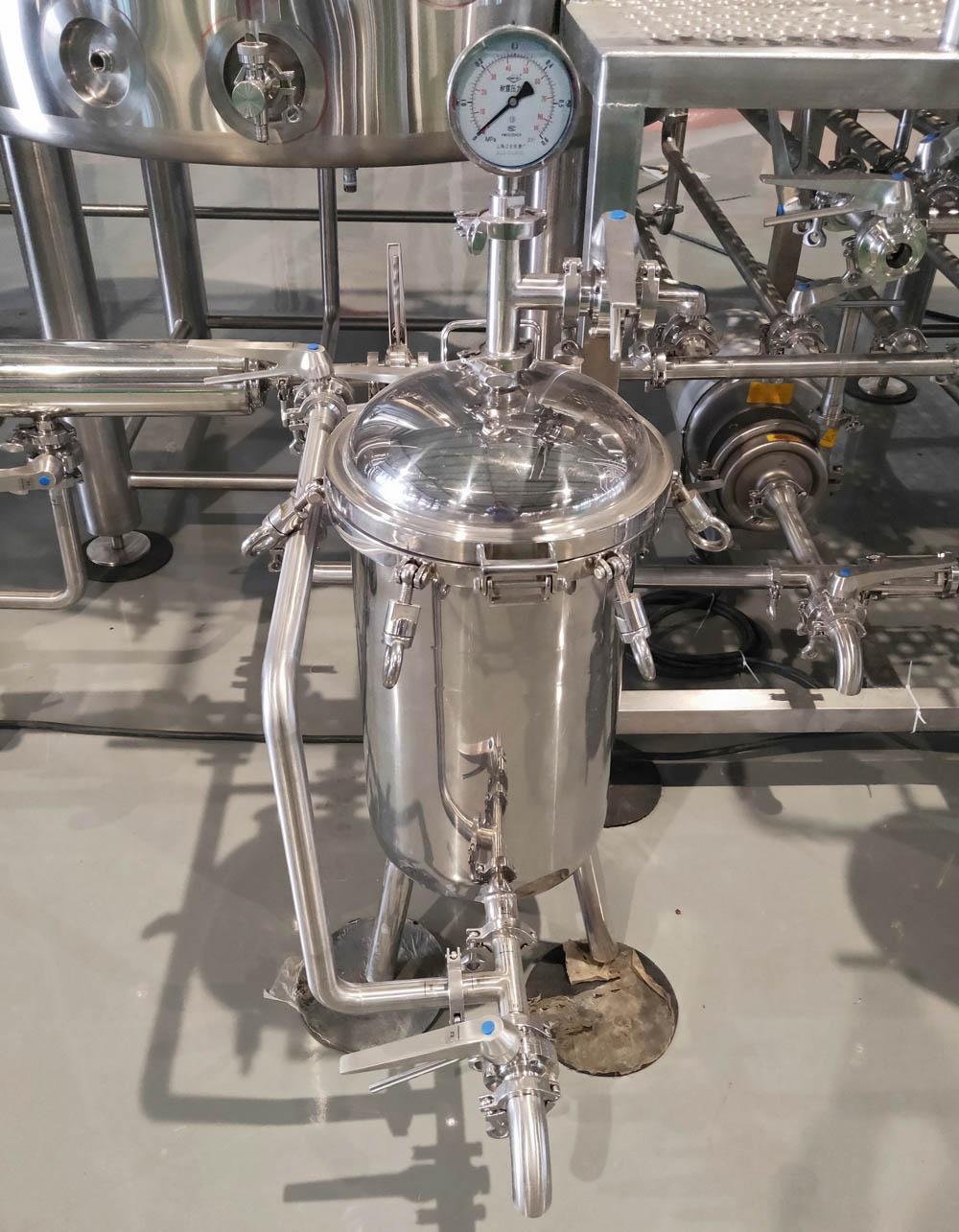
A hopback is a sealed vessel installed between the whirlpool (or kettle) and the wort chiller. It typically contains a bed of whole leaf hops or coarse pellets resting on a false bottom or screen. Hot wort flows through this bed on its way to the chiller. The wort extracts aromatic oils at near-boiling temperatures and then is rapidly cooled, locking in those volatile aromas.
b. Key Effects
Captures very fresh, vibrant hop aroma: The immediate cooling after contact minimizes evaporation loss.
Unique “fresh hop” character: Whole cone hops in a hopback can impart floral, herbal, and garden-fresh notes that pellets often cannot replicate.
Additional filtration: The hop bed acts as a natural filter, helping to remove suspended solids and improve wort clarity.
c. Practical Notes
Proper sealing and flow control are essential to avoid oxidation and ensure sufficient aroma extraction.
Requires additional equipment and cleaning steps compared to whirlpool hopping.
Often uses large quantities of whole hops, which can affect cost and supply planning.
3. Comparison of Whirlpool vs Hopback Addition
4. Practical Application
Today, whirlpool hopping has become a standard technique in modern craft breweries thanks to its simplicity and efficiency in enhancing aroma. Hopbacks, on the other hand, are often used by breweries aiming for specific aroma layers or premium products.
Some breweries even combine both methods: whirlpool hopping builds a solid base of hop aroma, while hopback addition layers on a bright, fresh hop character — resulting in a more complex and distinctive beer profile.
Whirlpool and hopback hopping give brewers powerful tools to fine-tune hop aroma and flavor expression. By choosing the right technique — or using both in combination — brewers can craft beers with deeper, more expressive hop character, which is key for modern hop-forward styles like IPA and Pale Ale.
These methods have become essential for brewers who want to stand out with bold, layered hop aromas in their beers.
Friends, if you are interested in these Two Non-Boil Hop Addition Methods, feel free to contact us to get FREE quotation, flow chart, layout etc.
Edited by Vicky
Sales Manager in Tiantai Brewtech
Email: [email protected]
However, as brewermasters increasingly pursue richer hop aroma and more nuanced flavor layers, non-boil hop addition techniques have become popular. These methods aim to maximize the retention of hop essential oils without extracting excessive bitterness.
Two of the most commonly used techniques are:
- Whirlpool Addition (around 80 °C / 176 °F, before whirlpooling)
- Hopback Addition (after whirlpool, before wort cooling).
1. Whirlpool Addition (Around 80 °C / 176 °F)
a. Process Overview
Whirlpool hopping takes place after the boil is complete. The wort is allowed to cool to around 75–85 °C (80 °C is typical), and hops are then added. The wort is set into a whirlpool, allowing the hops to steep in the hot wort for about 15–30 minutes before settling.
b. Key Effects
Enhanced hop aroma and flavor: The high but non-boiling temperature promotes the release and dissolution of hop oils, producing vibrant citrus, tropical fruit, and pine aromas.
Reduced bitterness extraction: At these temperatures, alpha acid isomerization occurs slowly, so bitterness is limited, allowing aroma to shine.
Wort clarification: Whirlpooling helps collect hop material and hot break in the center of the kettle, making wort transfer clearer.
c. Practical Notes
Temperature control is critical: Too hot, and unwanted bitterness develops; too cool, and oil extraction may be insufficient.
Addition rates depend on beer style: IPA whirlpool hop loads are often large.
Contact time influences both aroma intensity and bitterness extraction.
2. Hopback Addition (After Whirlpooling, Before Cooling)
a. Process Overview
A hopback is a sealed vessel installed between the whirlpool (or kettle) and the wort chiller. It typically contains a bed of whole leaf hops or coarse pellets resting on a false bottom or screen. Hot wort flows through this bed on its way to the chiller. The wort extracts aromatic oils at near-boiling temperatures and then is rapidly cooled, locking in those volatile aromas.
b. Key Effects
Captures very fresh, vibrant hop aroma: The immediate cooling after contact minimizes evaporation loss.
Unique “fresh hop” character: Whole cone hops in a hopback can impart floral, herbal, and garden-fresh notes that pellets often cannot replicate.
Additional filtration: The hop bed acts as a natural filter, helping to remove suspended solids and improve wort clarity.
c. Practical Notes
Proper sealing and flow control are essential to avoid oxidation and ensure sufficient aroma extraction.
Requires additional equipment and cleaning steps compared to whirlpool hopping.
Often uses large quantities of whole hops, which can affect cost and supply planning.
3. Comparison of Whirlpool vs Hopback Addition
| Aspect | Whirlpool Addition (≈80 °C) | Hopback Addition (Post-Whirlpool) |
| Timing | After boil → cool to ~80 °C → add hops → whirlpool | After whirlpool → before chiller → wort passes through hopback |
| Temperature | 75–85 °C | Near boiling but immediately cooled afterward |
| Aroma Profile | Tropical fruit, citrus, pine – typical of modern hop styles | Floral, herbal, fresh-cut “wet hop” notes |
| Bitterness Contribution | Moderate; depends on time and temperature | Very low; mostly aromatic |
| Volatile Loss | Some loss during steeping | Minimal, because wort is cooled right after extraction |
| Equipment | No extra equipment required | Requires a dedicated hopback and piping |
| Process Complexity | Simple, widely adopted | More complex; additional cleaning and control |
| Typical Use | IPAs, APAs, NEIPAs, hop-forward beers | English ales, pale ales, or specialty aroma-driven beers |
4. Practical Application
Today, whirlpool hopping has become a standard technique in modern craft breweries thanks to its simplicity and efficiency in enhancing aroma. Hopbacks, on the other hand, are often used by breweries aiming for specific aroma layers or premium products.
Some breweries even combine both methods: whirlpool hopping builds a solid base of hop aroma, while hopback addition layers on a bright, fresh hop character — resulting in a more complex and distinctive beer profile.
Whirlpool and hopback hopping give brewers powerful tools to fine-tune hop aroma and flavor expression. By choosing the right technique — or using both in combination — brewers can craft beers with deeper, more expressive hop character, which is key for modern hop-forward styles like IPA and Pale Ale.
These methods have become essential for brewers who want to stand out with bold, layered hop aromas in their beers.
Friends, if you are interested in these Two Non-Boil Hop Addition Methods, feel free to contact us to get FREE quotation, flow chart, layout etc.
Edited by Vicky
Sales Manager in Tiantai Brewtech
Email: [email protected]